Free 3D Pink Donut Tumbler Design: Integrating High-Quality Assets into Your Sublimation Workflow
In the competitive landscape of custom print-on-demand and small-batch crafting, the quality of your digital assets directly influences the perceived value of your final product. A Free 3D Pink Donut Tumbler Design is not merely a decorative image; it is a foundational component of a streamlined production pipeline. For entrepreneurs, hobbyists, and professional designers, understanding how to integrate such high-resolution graphics into existing workflows can significantly reduce preparation time while enhancing output consistency. This article explores the practical application of this specific design asset, focusing on technical compatibility, workflow integration, and quality control measures that ensure professional results.
Understanding the Asset Specifications and Technical Requirements
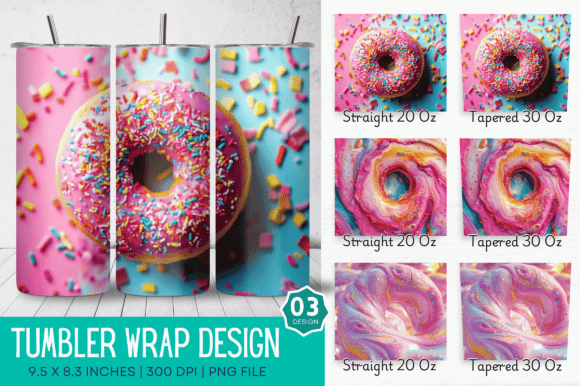
Before initiating any printing process, it is crucial to evaluate the technical specifications of the digital file. The Free 3D Pink Donut Tumbler Design provided by Digital_Art12 is engineered for precision, featuring a resolution of 300 DPI (dots per inch). This density is the industry standard for sublimation printing, ensuring that colors remain vivid and edges stay sharp when transferred onto physical surfaces. Lower resolution images often result in pixelation or blurriness, which can diminish the aesthetic appeal of the final tumbler.
The design is sized at 9.5 x 8.3 inches, specifically tailored for standard 20oz skinny tumblers. This dimension accounts for the straight tapered shape common in popular drinkware models. When incorporating this asset into your project, verify that your design software—whether Adobe Photoshop, Illustrator, Canva, or specialized sublimation tools—can handle PNG files with transparency if required. Although this specific design is a full wrap, understanding layer management in your software allows for future customization, such as adding names or logos without disrupting the underlying graphic integrity.
Pre-Production Preparation and Compatibility Checks
Effective workflow management begins before the printer is even turned on. Utilizing a Free 3D Pink Donut Tumbler Design requires a systematic approach to file organization and hardware readiness. Start by creating a dedicated folder for this project, storing the original PNG file alongside any backup copies. This practice prevents accidental overwrites and ensures you always have access to the pristine source file.
Next, assess your sublimation printer’s color profile. Sublimation ink behaves differently than standard inkjet or laser toner, often requiring specific ICC profiles to achieve accurate color reproduction. The vibrant pink hues and 3D shading effects in this donut design rely on precise color calibration. Perform a test print on standard sublimation paper to check for banding or color shifts. If the pinks appear washed out or the shadows lack depth, adjust your printer settings or recalibrate your monitor to match the output. This step is critical for maintaining brand consistency, especially if you are producing these tumblers for sale.
Additionally, ensure your heat press is clean and calibrated. Residue from previous projects can transfer onto the new tumbler, ruining the seamless wrap effect. The design’s precision depends on even heat distribution, so verify that your press maintains a consistent temperature across the entire platen area.
Integrating the Design into Your Production Workflow
Once the technical prerequisites are met, the next phase involves integrating the design into your actual production cycle. The Free 3D Pink Donut Tumbler Design is versatile, but its primary optimization is for 20oz skinny tumblers. To maximize efficiency, batch your tasks. If you are fulfilling multiple orders, prepare all your sublimation prints at once. This reduces the time spent switching between digital design work and physical printing, allowing you to focus on one mode of operation at a time.
When applying the design to the tumbler, alignment is key. The 9.5 x 8.3-inch dimensions are calculated to wrap around the tumbler with minimal overlap or gap. Use heat-resistant tape to secure the sublimation paper tightly against the metal surface. Any wrinkles or loose edges can cause ghosting, where the image appears double or blurred. For a professional finish, ensure the seam of the paper is placed in an inconspicuous area, although the seamless nature of this 3D design helps mask minor imperfections if executed correctly.
During the pressing phase, adhere strictly to the recommended time and temperature settings for your specific tumbler brand. Typically, this ranges from 380°F to 400°F for 180–200 seconds. Consistency here ensures that the 3D effects of the donut graphic pop with the intended vibrancy. After pressing, allow the tumbler to cool completely before removing the paper. Rushing this step can lead to smudging or incomplete ink transfer.
Expanding Utility Beyond Drinkware
While optimized for tumblers, the versatility of this digital asset extends to various other merchandise categories. The high-resolution PNG format allows for resizing without significant quality loss, making it suitable for T-shirts, hats, stickers, cups, backpacks, phone cases, blankets, and pillows. This multi-use capability enhances the return on investment for the time spent acquiring and preparing the file.
For small business owners, this flexibility supports diversified product offerings. You can create cohesive themed collections, such as a "Sweet Treats" line featuring the donut design across different items. When adapting the design for non-cylindrical surfaces like T-shirts or phone cases, consider how the 3D perspective interacts with the new canvas. You may need to adjust the positioning or scale to ensure the focal point of the donut remains central and visually balanced. This adaptability makes the Free 3D Pink Donut Tumbler Design a valuable resource for marketers looking to expand their catalog without commissioning new artwork for each product type.
Quality Control and Long-Term Asset Management
Maintaining high standards requires rigorous quality control. Inspect each finished product for color accuracy, alignment, and surface defects. Document any issues encountered during the process, such as specific color adjustments needed for certain batches of tumblers. This data becomes invaluable for refining your workflow over time. If you notice consistent color deviations, revisit your ICC profiles or ink levels.
From a long-term perspective, treat this digital download as a permanent asset in your library. Even though it is a free resource, its utility persists across multiple projects. Organize your digital assets by theme, resolution, and usage rights. Since this is a digital download with no physical product shipped, ensuring you have the necessary software to utilize the file is your responsibility. Keep your design software updated to maintain compatibility with high-resolution PNGs and advanced layering features.
Furthermore, consider the branding implications. While the design is ready-to-use, adding your own watermark or logo subtly can help establish brand identity, especially if selling on platforms like Etsy or Amazon Handmade. Ensure any additions complement the 3D aesthetic rather than cluttering it. The clean, vibrant nature of the pink donut graphic provides ample negative space or complementary areas for subtle branding elements.
Conclusion: Streamlining Creativity with Ready-Made Assets
Incorporating a Free 3D Pink Donut Tumbler Design into your creative or business workflow exemplifies the balance between efficiency and quality. By understanding the technical specifications, preparing your equipment meticulously, and integrating the asset into a structured production process, you can achieve professional-grade results consistently. Whether used for personal gifts, small business inventory, or expanded product lines, this high-resolution design serves as a reliable foundation for diverse sublimation projects. Focus on precision, maintain rigorous quality control, and leverage the versatility of the file to maximize its value in your ongoing creative endeavors.