Summer Vacation Square Coaster, Travel: Elevating Your Sublimation Projects with Precision
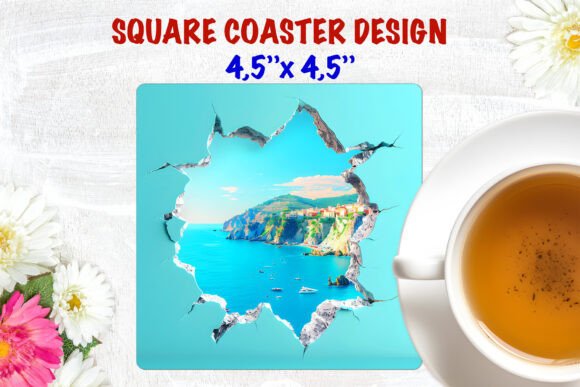
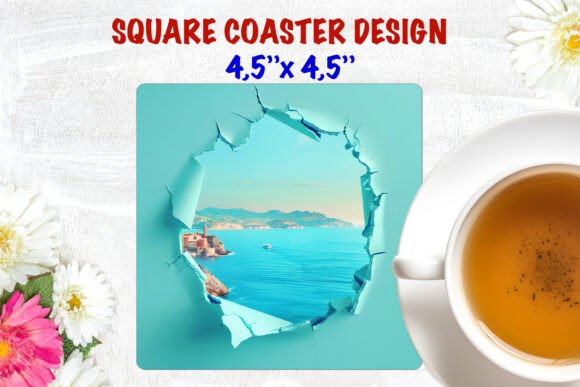
The allure of summer is not just in the destination but in the tangible memories we bring home. For creators, entrepreneurs, and hobbyists in the sublimation industry, capturing that essence requires more than just a pretty picture; it demands technical precision and aesthetic intelligence. The Summer Vacation Square Coaster, Travel design concept offers a compelling blend of escapism and modern artistry. Featuring a 3D broken wall effect that reveals a stunning nature scene of a sea, city by sea, or vacation landscape, this design taps into the universal desire for relaxation and adventure. However, successfully translating this AI-generated digital asset into a high-quality physical product involves navigating several common pitfalls that can compromise your final result.
Understanding the Design Aesthetic and Market Appeal
Before diving into production, it is crucial to understand why this specific design resonates with consumers. The "broken wall" illusion creates depth, making the flat surface of a coaster appear as a window into a serene coastal city or a tranquil beach. This trompe-l'oeil effect is highly popular in home decor because it adds visual interest without clutter. When you offer a Travel coaster sublimation product with this theme, you are selling an experience. Customers are not just buying protection for their furniture; they are buying a momentary escape to a sunny seaside cafe or a quiet ocean view.
The square format, specifically at dimensions of 4.5 x 4.5 inches, is versatile. It fits standard cup holders and looks modern on coffee tables. However, the complexity of the 3D effect means that print quality is non-negotiable. A blurry or pixelated image will break the illusion instantly, turning a premium-looking item into a cheap novelty.
Common Mistakes in File Preparation and Resolution
One of the most frequent errors beginners make is underestimating the importance of source file quality. Many assume that an image looking sharp on a computer screen will print perfectly. This is a dangerous misconception. Sublimation printing transfers ink into the polymer coating of the coaster, and any imperfection in the digital file will be magnified in the physical product.
The 300 DPI Requirement
You must ensure that your PNG file is exactly 300 DPI (dots per inch) at the final print size of 4.5 x 4.5 inches. If you take a lower resolution image and stretch it to fit, the result will be pixelation, especially noticeable in the fine details of the city architecture or the water ripples in the sea scene. Always check the image properties before starting your design workflow. An AI-generated image can sometimes come out at 72 DPI or with inconsistent dimensions. Resizing it incorrectly leads to a muddy, unprofessional finish that fails to capture the crispness of the 3D broken wall effect.
Ignoring the Bleed Area
Another critical oversight is neglecting the bleed area. When pressing a square coaster, slight shifts can occur. If your design ends exactly at the 4.5-inch mark, you risk having white edges or cut-off elements. Always extend your background slightly beyond the trim line. For a seamless look, ensure the "wall" texture continues to the edge so that minor misalignments during pressing are less visible.
Color Management and Sublimation Specifics
Sublimation printing behaves differently than standard inkjet printing. Colors often appear lighter after pressing because the ink turns from solid to gas and bonds with the polyester coating. A common mistake is designing with colors that are too subtle or pastel-heavy without accounting for this fade.
- Oversaturation vs. Undersaturation: While you want vibrant summer tones, oversaturating the digital file can lead to banding or color shifting. Conversely, if the image is too dark, the details in the shadowed areas of the "broken wall" may disappear entirely.
- White Background Issues: Ensure your PNG file has a transparent background if you are layering elements, or a pure white background if the design covers the whole coaster. Grayish backgrounds will result in a dull, aged look rather than a bright, fresh summer vibe.
To avoid these issues, always perform a test press. Print a small batch and evaluate the color accuracy. Adjust your printer profile if necessary. Remember, the blue of the sea and the sky needs to pop against the neutral tones of the broken wall to maintain the 3D illusion.
Selecting the Right Blanks and Pressing Techniques
Even with a perfect digital file, the wrong physical materials can ruin your project. Not all coasters are created equal. For sublimation, you need blanks with a high-quality polymer coating. Cheap coasters may have uneven coatings, leading to patchy color transfer where parts of the sea scene look washed out while others remain vibrant.
Heat Press Settings
Temperature and time are critical. Most square sublimation coasters require a temperature around 385°F to 400°F for approximately 180 to 200 seconds. However, these settings can vary based on your specific heat press and the brand of the coaster. Using too much pressure can cause the ink to bleed, blurring the sharp lines of the city skyline. Too little pressure results in faint, incomplete transfers.
A practical approach is to keep a logbook. Record the time, temperature, and pressure for each batch. If you notice the "broken wall" texture looks soft or undefined, increase the pressure slightly. If the colors look burnt or yellowed, reduce the time or temperature. Consistency is key to building a reputable brand.
Marketing and Presentation Strategies
Once you have mastered the production, how you present the Summer Vacation Square Coaster, Travel design matters. Since the design features a 3D effect, static photos may not fully convey the depth. Consider using angled shots that highlight the perspective of the broken wall. Show the coaster in use—with a cold drink condensing on top—to evoke the feeling of a hot summer day.
Be transparent about the product. Clearly state that the design is AI-generated and printed via sublimation. Educate your customers on care instructions: hand wash only, no microwave, and avoid abrasive scrubbers. This reduces returns and builds trust. Highlighting the durability and the unique artistic angle of the 3D nature scene can differentiate your product from generic floral or geometric designs.
Final Checklist Before Launch
Before you list your product or gift it to a client, run through this quick evaluation:
- Resolution Check: Is the PNG file 300 DPI at 4.5 x 4.5 inches?
- Color Proof: Have you test-printed to ensure the sea blues and wall grays are balanced?
- Edge Inspection: Are there any white gaps or misalignments on the pressed coaster?
- Surface Quality: Is the coating smooth, with no scratches or dust particles trapped under the ink?
- Packaging: Does your packaging protect the glossy surface during shipping?
By paying attention to these details, you transform a simple digital file into a high-value tactile experience. The Travel coaster sublimation market is competitive, but quality and attention to detail set professionals apart. Avoid the shortcuts that lead to poor usability and dissatisfaction. Instead, focus on precision, from the initial download of the AI-generated image to the final peel of the transfer paper. This diligence ensures that every coaster you produce captures the true spirit of summer vacation, offering your customers a durable, beautiful piece of art for their homes.