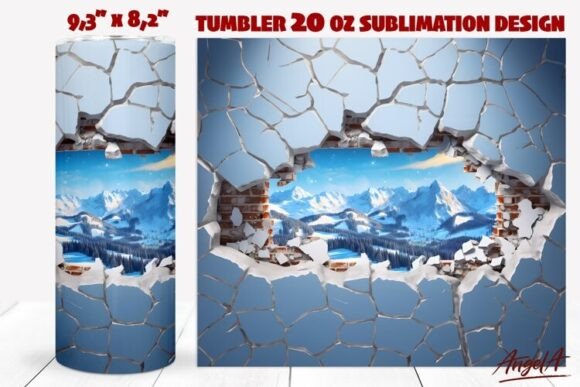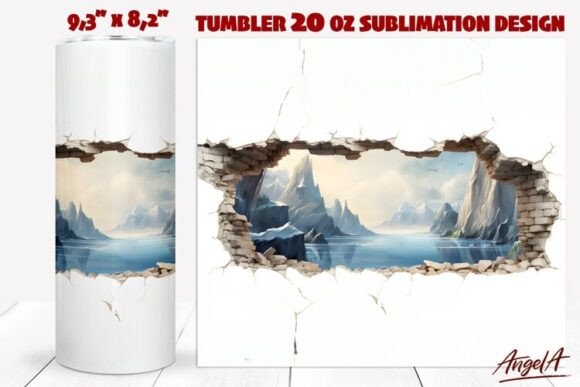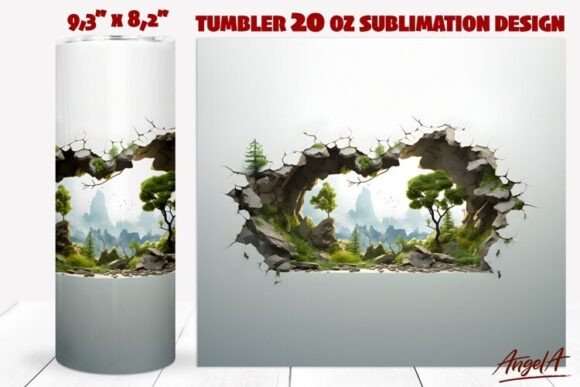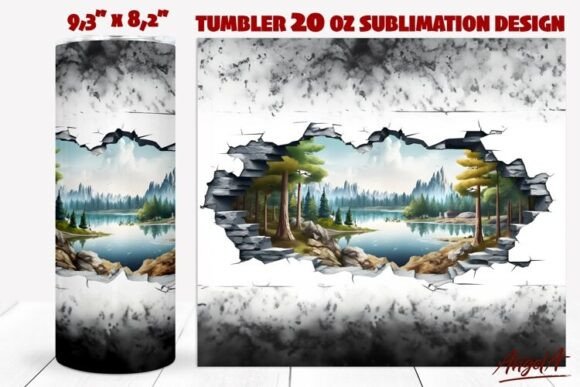
Evaluating the Practical Value of 3D Sublimation Tumbler Wrap Designs
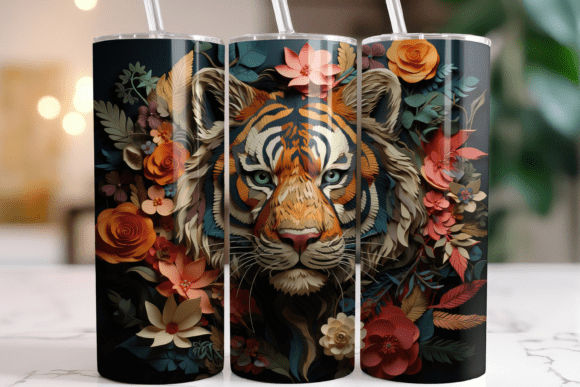
The custom drinkware market has evolved significantly over the past decade, shifting from simple logo placement to complex, full-coverage graphics that demand high technical precision. For creators and small business owners, the 3D Sublimation Tumbler Wrap Design represents a critical asset in this ecosystem. It is not merely a decorative element but a functional template that bridges the gap between digital artistry and physical product quality. Understanding the nuances of these designs—specifically those that are AI-generated and professionally enhanced—is essential for anyone looking to streamline their production workflow while maintaining a professional aesthetic.
The Intersection of AI Generation and Professional Enhancement
A common misconception in the digital design space is that AI-generated assets are ready for immediate commercial use without modification. In reality, raw AI output often lacks the specific dimensional accuracy required for sublimation printing. This is where the value of a hybrid approach becomes evident. The design package described here leverages artificial intelligence for initial concept generation and creative ideation, but it relies on human expertise via Adobe Photoshop for refinement. This combination ensures that the artistic vision is preserved while meeting the rigorous technical standards of print-on-demand manufacturing.
By modifying and enhancing AI-generated base images, designers can correct perspective distortions, adjust color profiles for accurate sublimation transfer, and ensure that key visual elements do not fall into the "dead zones" of the tumbler curve. For the end-user, this means receiving a file that is not just visually appealing but technically viable. It reduces the trial-and-error phase that often plagues new entrepreneurs who attempt to create wraps from scratch without understanding the intricacies of cylindrical mapping.
Technical Specifications and File Usability
When evaluating any digital asset for print purposes, resolution and format are non-negotiable factors. The inclusion of a ZIP file containing 1x Straight and Tapered PNG file in High resolution at 300 dpi addresses the two most common shapes in the tumbler industry. Straight tumblers, such as the popular 20oz skinny style, require a different aspect ratio compared to tapered tumblers, which narrow toward the base. Providing both formats in a single download eliminates the need for manual resizing, which can often lead to pixelation or distortion if not handled by an experienced graphic designer.
The choice of PNG format is particularly strategic. Unlike JPEGs, PNGs support transparency and lossless compression, ensuring that the edges of the design remain crisp and that no compression artifacts interfere with the sublimation process. At 300 dots per inch (dpi), the files meet the industry standard for high-quality printing. Lower resolutions may appear acceptable on a computer screen but often result in blurry or jagged prints when transferred onto metal surfaces. This attention to technical detail suggests a product designed for reliability rather than just quick consumption.
The Strategic Value of Included Bonus Assets
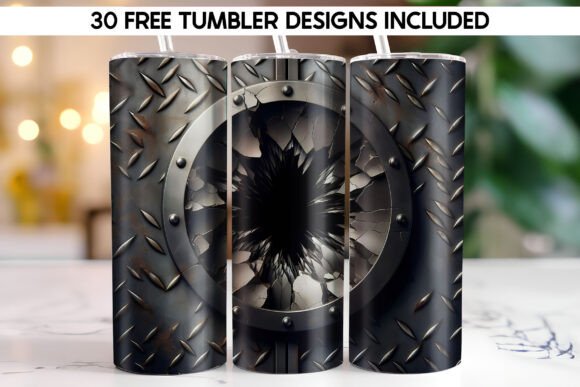
Beyond the primary design, the inclusion of 30 Free Tumbler Designs adds substantial long-term value to the purchase. For freelancers and small business owners, building a diverse portfolio is crucial for attracting a wider customer base. These additional assets allow sellers to test different aesthetic niches—from minimalist patterns to bold, colorful graphics—without incurring additional licensing fees or design costs. This variety supports A/B testing in online marketplaces, helping creators identify which styles resonate most with their target audience.
Furthermore, having a library of pre-made designs can serve as a safety net during peak seasons. When order volumes increase, such as during holidays or special events, the ability to quickly deploy proven designs can significantly reduce workload stress. It allows the entrepreneur to focus on marketing and customer service rather than spending hours creating new artwork from scratch. This operational efficiency is a key benefit that often goes unnoticed until one is faced with a backlog of orders.
Dimensions and Compatibility Considerations
The specified size of 9.3×8.2 inches is a standard dimension for many popular tumbler models, but it is vital for users to verify compatibility with their specific blank products. Sublimation requires a precise fit; even a millimeter of overlap or gap can ruin the final presentation. While this design is optimized for common sizes, users should always measure their specific tumbler blanks before printing. The flexibility of the PNG format allows for minor adjustments in software like Photoshop or Canva, but significant scaling should be avoided to maintain the 300 dpi integrity.
It is also worth noting that the "3D" aspect of the wrap design refers to the visual depth and perspective created within the graphic, not a physical texture. The sublimation process itself results in a smooth, flat finish where the ink becomes part of the polymer coating. Therefore, the effectiveness of the "3D" illusion depends heavily on the quality of the original render and the color accuracy of the printer. Users with calibrated monitors and high-quality sublimation printers will achieve the best results, highlighting the importance of a controlled production environment.
Who Benefits Most from This Resource?
This type of design asset is particularly well-suited for several groups. Small business owners who sell on platforms like Etsy or Shopify will find the ready-to-print nature of the files invaluable for scaling their operations. Freelance designers can use these wraps as base layers for client projects, saving time on the initial layout phase. Additionally, educators and hobbyists interested in learning about sublimation techniques can use these high-quality files to practice alignment and heat press settings without the frustration of designing complex graphics simultaneously.
However, it may be less suitable for large-scale manufacturers who require fully customizable vector files for brand-specific logos. While the PNG format is high quality, it is raster-based, meaning it cannot be infinitely scaled without loss of quality. For businesses that need to adapt designs to vastly different product sizes, vector-based solutions might be more appropriate. Nevertheless, for the standard tumbler market, this raster approach offers a balance of ease-of-use and visual fidelity that is hard to match.
Practical Recommendations for Best Results
To maximize the potential of this 3D Sublimation Tumbler Wrap Design, users should adhere to a few best practices. First, always perform a test print on paper before committing to sublimation paper. This helps verify color accuracy and ensures that the design aligns correctly with the tumbler's seam. Second, invest in high-quality sublimation ink and paper, as the final output is only as good as the materials used. Finally, consider the lighting conditions under which the tumblers will be photographed for marketing purposes. The intricate details of the AI-enhanced design will shine brightest with proper lighting, enhancing the perceived value of the finished product.
In conclusion, this listing offers a pragmatic solution for creators seeking to enhance their product offerings with minimal technical overhead. By combining AI creativity with professional refinement, it delivers a reliable, high-quality asset that supports both immediate sales goals and long-term business growth. For those willing to invest in the right equipment and follow proper printing protocols, this design package serves as a solid foundation for a successful sublimation venture.